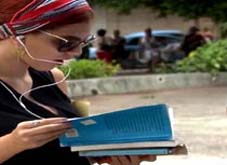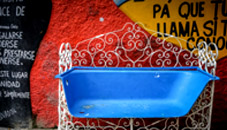
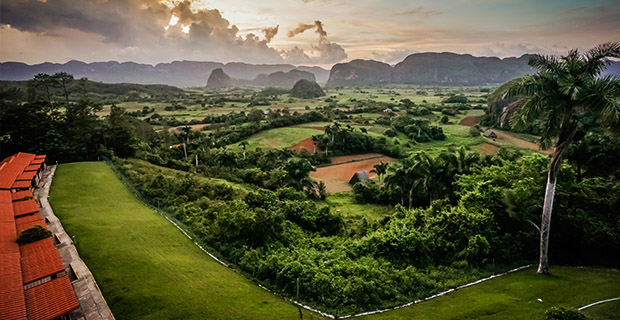
An unusual blend of interesting geology and history make Viñales a fascinating place to photograph. From caves to ancient pictographs to a giant modern mural in tribute to its prehistoric origins, you’ll find plenty of camera worthy subjects. It is also home to an authentic Cuba tradition of tobacco farming.
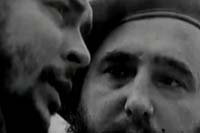
The father and son team of Osvaldo and Roberto Salas have also been extremely important to the photo documentation of Cuba’s modern era. Osvaldo headed up the photographic department at the newspaper Revolucion, while Roberto personally documented Fidel Castro’s transition from a youthful revolutionary in the 1950s into an elder world leader in the 21st century. The Cuba Travel experience wouldn’t be completed without some exposure to the historical aspects of Cuban photography.

For such a small island, Cuba has produced a number of internationally recognized photo- graphers such as Alberto Diaz Guiterrez, usually known by the single name, Korda. He created the iconic image of Che Guevara that is recognized around the world. We will learn about it and see originals during the visit to Fototeca as part of our Cuba Tours.

Rene Pena is a self-taught photographer who makes his home in Cerro, a neighborhood of Havana that was once home to Havana’s wealthy and that now is an African Caribbean neighbor- hood of far more modest means. Rene Pena is a photographer who explores complex themes of identity, particularly as related to race.
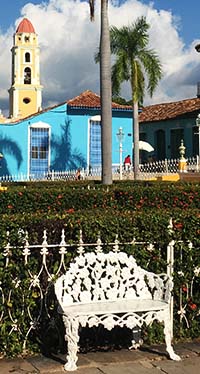
The historical center of Trinidad was named a World Heritage site by UNESCO in 1988 because its red-tiled roofed, pastel colored buildings have survived since the era of Cuban slavery. When the slave trade was abolished in the middle of the 19th century, the city saw little activity, thus preserving its authentic Cuba heritage.
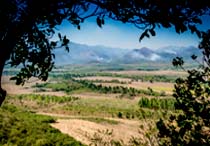
Authentic Cuba Travel® will also take you to exploreValle de los Ingenios, known as Sugar Mill Valley in English, is actually a series of valleys where once more than fifty mills processed the sugar cane coming from Cuba’s sugar plantations. At their height, more than 30,000 slaves of African heritage kept the mills operating. Both the structures still intact, as well as the ruins, make for interesting photographs.
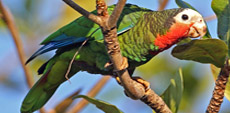
For the Cuba Explorer, brilliantly colored birds, exotic plants, mysterious grottos, and gorgeous cascading waters make the trip up into the Escambray Mountains worthwhile for any photographer who enjoys nature. And in the village, you can get a cup of locally grown, authentic Cuba coffee!
Day 1: Saturday, 5 April, 2025:
“Hello Cuba!”
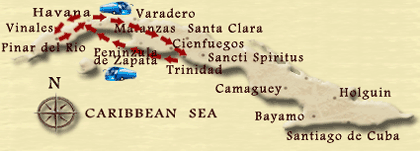
After your arrival at
Jose Marti International Airport, you’ll begin your Cuba Photography Adventure with a brief bus ride to your
Luxury Casa Particular.
Your Authentic Cuba Travel® guide will facilitate the group check-in at this lovely facility in the heart of the vibrant,
Vedado Neighborhood.
Between 7:00 a.m. to 10:00 a.m. an included breakfast is served at your Casa Particular.
Day 2: Sunday, 6 April, 2025:
UNESCO World Heritage Site, Viñales Valley
Morning:
Your photographic Cuba travel experience will begin right away with a day trip to
Vinales Valley. Visually striking, the valley contains a number of unusual geological features including caverns and magotes—rocky hills with cliff-like sides and domed tops.
After meeting with traditional tobacco farmers in the valley, your Cuba travel will make a stop at the “
Mural de la Prehistoria.” Leovigildo Morillos painted this giant mural on the side of a magote in the early 1960s.
Our tours to Cuba for Americans feature a delicious traditional lunch at the privately-owned bar-restaurant
Paladar Yuri & Nino, El Campesino. Yuri is a young woman entrepreneur who started this small restaurant that has expanded into a large establishment. Yuri and her family work hard to create delicious and plentiful food that comes with a beautiful mountain view.
After lunch, your Cuba journey will continue with a fascinating boat ride through
Cueva del Indio on its underground stream. Part of a massive system of caverns, the caves were used by early Amerindians—as evidenced by cave painting—and as a hiding place for African slaves escaping their Spanish masters.
During the afternoon you’ll have time to wander
Viñales town and to photograph its quaint small houses and local church, take-in the handicraft market or Viñales’ famous cigar shop, or just enjoy snapping the world as it strolls by your lens.
Return to your private rental accomodation.
Evening:
After refreshing yourself at the hotel, Authentic Cuba Travel® suggests visiting
Club La Zorra y El Cuervo. It’s a must-do for jazz enthusiasts and a great way for anyone who enjoys music to experience the
jazz stylings of authentic Cuba. (Not included.)
Day 3: Monday, 7 April 2025:
Experience Old and New Havana- Real Cuba
Morning: Day three of your Cuba tour begins with an introduction by Dr. Miguel Coyula, a leading urban planner responsible for overseeing Havana’s development. Dr. Coyula, a thoughtful and informative tour guide, will explain Havana’s architectural history and the efforts underway to preserve its heritage while meeting modern needs. A
Scale Model of Old Havana will help you visualize how the city has expanded and transformed.
We’ll continue our Cuba journey overview with a motor coach tour through various sections of
Havana City. You’ll see modern construction and public art in places like the
Square of Revolution and the
University of Havana, as well as contrasting, traditional, buildings and monuments like the
Cementerio de Cristóbal Colón.
Lunch: a new wave of paladares (privately-owned restaurants) has recently swept the Cuban dining scene offering excellent food and charming ambient. Today we’ll enjoy a lunch at the stylish
Paladar San Cristobal, one of Havana's top ten private restaurants.
Afternoon: Get your cameras ready as your authentic Cuba tour continues with a walk through
Old Havana. This UNESCO World Heritage Site provides ample opportunity to take some great photos as you stroll through ‘Habana Vieja’s’ historic squares.
From the
Square of Arms where the Spanish colonial forces conducted their drills, to the monumental, baroque Cathedral that gives
Cathedral Square its name, you’ll be treated to people watching, colonial architecture, and a pace of life that can only be described as authentic Cuba.
You’ll have the chance to see the magnificent restoration work that has been done on buildings like the 16th century,
Castillo de la Real Fuerza, a Spanish fortress complete with a water-filled moat.
Another visual treat will be a stop in to observe the young lithographers making prints at the
Taller Experimental de Gráfica.
Your Cuba cultural tour of Old Havana will continue past rambling little side streets into the
Square of San Francisco and then to
Plaza Vieja, the crossroads of Old Havana featuring a mix of architecture varying from art nouveau to baroque.
The final stop of the day includes a chance to both shop and take photographs in
Old Havana’s delightful handicraft market. You’ll find handmade pottery, jewelry and leather goods, authentic Cuba clothing, and fanciful paper maché.
Return to your private rental accomodation.
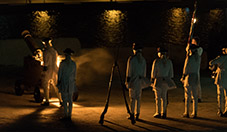
Tonight there will be the chance to shoot photographs while soldiers in 18th century costumes shoot cannons! Making the short journey across the harbor with your Authentic Cuba Tours guide, you’ll get a taste of a popular tradition, as well as a stellar view of Havana, at the “
Fire of the Cannon of 9 O'Clock.”
Day 4: Tuesday, 8 April 2025:
Art and Photography in the Cuban Capital
Morning:
Returning to
Plaza Vieja, you’ll be immersed in Cuban photography at the
Fototeca de Cuba, a preeminent archive, museum, and exhibition space.
During your visit, you’ll have a chance to view the permanent and rotating photographic exhibitions, as well as talk to the staff about their ongoing projects to study, preserve and exhibit the photographic legacy of the authentic Cuba.
On our way to lunch, there will be a wonderful photographic opportunity at
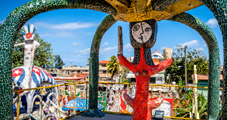
Callejon de Hamel, an innovative and imaginative community art installation. Using entire buildings as canvases, Salvador Gonzales grounds his fantastic paintings and mesmerizing sculptures in themes taken from Afro-Cuban legend. Mr. Gonzales will also be present to meet with the Authentic Cuba photo tour to discuss the impact of community art.
Lunch: Our midday meal today will include a little food for the soul as we visit the residence and workplace of one of Cuba’s most original and well-known artists. Our luncheon host,
Jose Fuster, works in a variety of mediums and is a wonderful ambassador for Cuban culture.
Afternoon: Our Cuba cultural agenda this afternoon offers an intimate look into the world of some established photographers as well as a glimpse of Cuba’s photographic future.
With studio visits to well-known contemporary photographers like
Juan Carlos Alom and
Rene Pena as well as up and coming artists, you’ll have a rare chance to interact photographer to photographer.
Return to your private rental accomodation.
Evening:
Tonight the Cuba photography trip will attend a reception at the
Ludwig Foundation of Cuba, a non-governmental, non-profit organization devoted to the promotion of Cuban art. Working to create Cuba cultural bridges to other countries, LFC encourages international dialogue.
Day 5: Wednesday, 9 April 2025:
En Route to Trinidad
Morning:
Cuba explorer tours
Cienfuegos City en route to
Trinidad. Cienfuegos is not a large city, but it is home to one of the busiest harbors on the island.
You’ll have an excellent view of the bay from
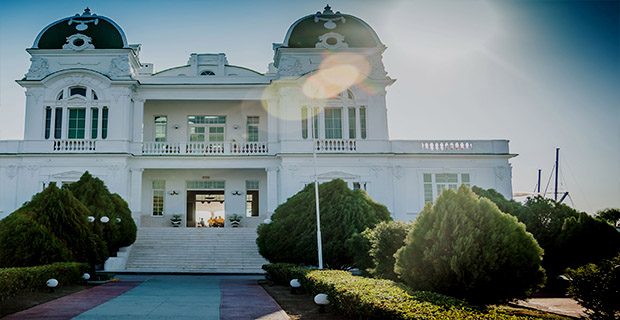
Palacio de Valle, an opulent, early 20th century home. Originally built for a wealthy sugar merchant, it presents a strikingly eclectic blend of European and Moorish architectural features and has three towers in three distinct architectural styles.
Lunch is included at
Paladar Ache, one of Cienfuegos top ten private restaurants, serving local specialties in a pleasant courtyard.
Afternoon: After lunch, it’s time for a walking tour and a chance to photograph this stunning
World Heritage Site. Your Authentic Cuba odyssey continues with a stroll through the old city, a fabulous example of early urban planning.
Singled out by UNESCO for its extensive and well-preserved Neo-classical architecture, Cienfuegos boasts 333 structures built in the 19th century or earlier. Cienfuegos is also home to the
Paseo de Prado, the longest tree-lined boulevard on the island.
Known as “
The Pearl of the South,” Cienfuegos offers much to please the photographer’s eye including gorgeous domed buildings, an asymmetrical
Cathedral with stunning stained glass, and the
Tomas Terry Theater, a national monument with an excellent ceiling fresco and its original, wooden, theater seats.
Before departing Cienfuegos, we’ll stop at
Galleria de Arte Maroya located on the main city park. Featuring a variety of work by local artists and artisans, the gallery is especially known for Fidel Lopez’s handmade replicas of Spanish galleons.
Now we journey on to the historic city of Trinidad and check in at your
Luxury Casa Particular.
You'll have time for dinner and a swim in the warm waters of the Caribbean Sea.
Day 6: Thursday, 10 April, 2025 UNESCO Sites:
Trinidad & The Valley of Sugar Mills
Morning: You’ll hardly believe you are still in the 21st century as you spend your morning on a guided cultural tour of
Trinidad.
You can take plenty of photographs as you walk the streets, visit museums located in historic buildings, and stop at a lookout tower for a breathtaking view of the
Sugar Mill Valley.
One unusual stop is the
Museo Nacional de la Lucha Contra Bandidos, a historical museum housed in a former convent. Dedicated to the struggle against mountain-based counterrevolutionaries, part of an American U2 spy plane brought down over Cuba is also exhibited.
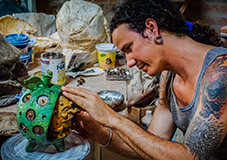
Before lunch we’ll also stop to visit a local family of artisans who have been making handmade pottery for more than 100 years.
The Santander Family definitely represents the best of authentic Cuba.
Lunch at
Solananda Paladar.
Afternoon: Enjoy an afternoon and evening on your own to relax, swim, walk the beach, explore the nooks of Trinidad and, of course, take photographs.
For a lively musical outing and a chance to do a little dancing, head over to the
Casa de la Música.
At 10pm you can join with locals on its sweeping staircase for a salsa show. Full salsa concerts are also held in the rear courtyard for a small cover charge.
Day 7: Friday, 11 April 2025 National Park Visit:
Topes de Collantes. Cuba Bella!
Morning: Today’s adventure includes a short trip into the
Escambray Mountains via Russian army trucks, worthy of their own photographs!
While the south face of the mountains is rather dry, the north facing side of the mountains is home to a wide variety of trees and lush tropical plants.
Lunch: We’ll have an authentic Cuba luncheon at
Hacienda Codina. An old Spanish estate, it’s home to numerous species of orchids, medicinal mud baths and gardens, and a cave with a secret passage leading to a spectacular view of Trinidad.
Topes de Collantes offers the chance to take wonderful nature walks during which you may spy—and photograph—the Butterfly Lily, Cuba’ national flower, the Cuban Ivory-Billed Woodpecker, Cuba’s national bird, or some of Cuba’s particular species of hummingbirds.
Afternoon: Return to
Havana City and check back into your high-end
Casa Particular.
Day 8: Saturday, 12 April 2025
Buen viaje!
Your Cuba photography tour ends with a morning transfer to Jose Marti International Airport.




 Hola! My name is Yane Marquez and I was born and raised in Cuba. After graduating from the University of Havana and the Tourism School of Cuba, I worked for over 10 years as a tour guide, translator and event organizer for Cuba's travel companies and organizations. I guided many groups attending Cuba's main international festivals, fairs and events. A few years ago, I moved to Canada where I have continued promoting Cuba’s tourism industry. I would be more than happy to answer any question you have about festival Cuba travel. Do not miss out!


















 Authentic Cuba Travel®'s cultural tours are hosted by Cuba’s key Culture ministries, organizing committees and Cuban culture personalities. Travel with the peace of mind of knowing you are in the best hands!