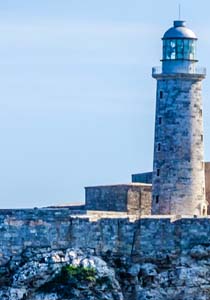
The best examples of early
Cuban Architecture can be seen in military fortifications such as
the Fortress of the Royal Force and the Morro Castle dating from the 16th Century.
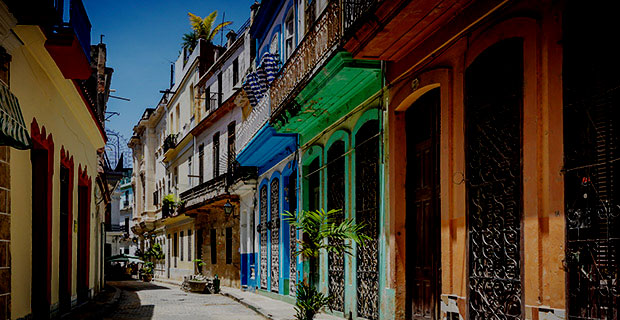
The influence from different styles and cultures can be seen in Havana's colonial architecture,
with a diverse range of Moorish, Spanish, Italian, Greek and Roman.
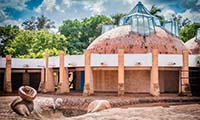
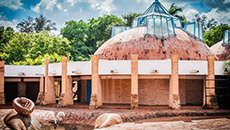
Cuba’s National Art Schools, an example of Cuba's architecture after the Revolution. The schools embody Cuba’s cultural heritage,
radical architecture, regional building technologies, and restored hope for Cuba’s future. In 1999, they
were placed on the World Monuments Fund Watch List, which calls attention to endangered cultural heritage sites.
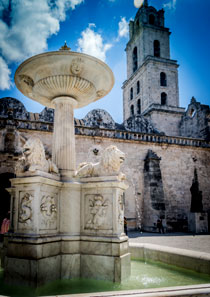
Plaza de San Francisco soon became the trade square of the city during early colonial times. Galleons full of Spanish immigrants and African slaves called port here to unload their human cargo and stockpile before continuing on journey to The West Indies.
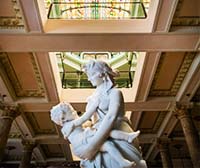
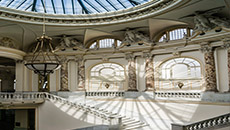
The Centro Asturiano building, designed by Spanish architect Manuel del Busto, features
solid heavy façades constructed
in Capellania stones with clear influence of Spanish Renaissance. It houses the most majestic staircase
of Cuban architecture.
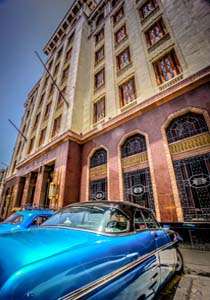
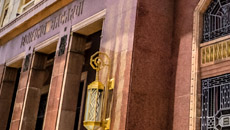
Bacardi building (1930), the former headquarters of famous rum company, was designed by
Cuban Architects Esteban Rodriguez Castells, Rafael Fernandez Ruenes and Jose Menendez Menendez.
It shows a close kinship to New York's art deco towers. It's a fantastic construction with polychrome ceramic
decorations. The tower was one of the first skyscrapers in Havana and is crowned with the Bacardí bat,
that is also used as a weathercock. The granite was imported from Bavaria and Norway.
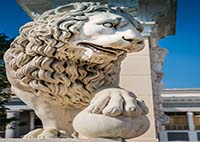 Cienfuegos
 city is the first, and an outstanding example of an architectural ensemble that represents the new ideas of
modernity, hygiene and order in urban planning as developed in Latin America from the 19th century.
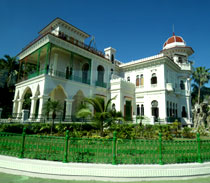
The building showing an eclectic architecture was erected at a cost of a million and half pesos.
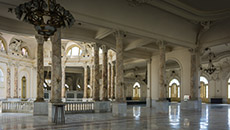
French, Arabic, Italian and Cuban artisans worked with marble, alabaster, brass, glass and ceramic imported from Spain, Italy
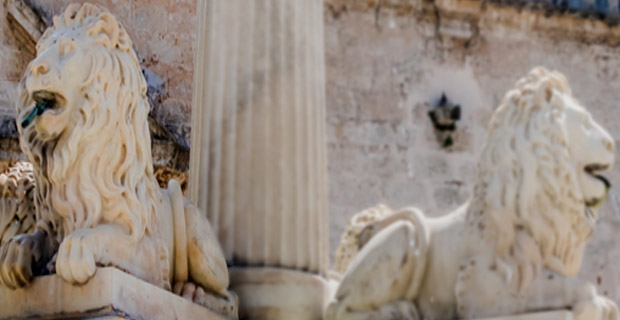
and United States. The entrance is primitive Gothic style and leads to a dining room of Mudejar architecture influence,
which imitates the famous Patio of the Lions, of Alhambra, in Granada.
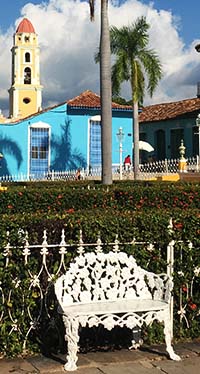 Trinidad
 is an outstanding example of Cuba's colonial architecture. It has maintained its historic core, featuring
the highest percentage of surviving antique buildings and public squares and bringing together architectural, historic
and cultural elements of great value.
Day 1. Saturday 9 August 2025.
Hello Cuba
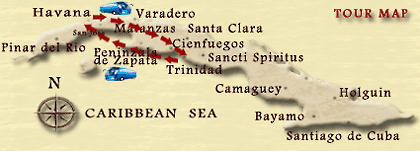 Arrival
 at "Jose Marti" International Airport in Cuba's capital city.
Welcome to
Havana City, one of the most stunning architecturally designed cities in the world, with extraordinary variety and quality.
Its architecture mirrors its rich social and political history. Contrasts of color and texture are shaped on the facades.
Your Cuba architecture and cultural journey has just begun!
Meet your Authentic Cuba Travel® tour guide and bus driver.
Private transfer to your
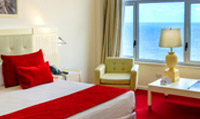
Luxury Casa Particular located at the cultural center of Havana City.
Group check-in.
Breakfast is complimentary from 7:00 a.m. to 10:00 a.m.
Day 2. Sunday 10 August 2025.
Havana. Exploring Old Havana
Morning: meeting with our guide for the morning, architect Miguel Coyula from the
Group for the Comprehensive Development
of Havana City at their headquarters in
The Scale Model of Havana City, a museum that contains a model of the entire city of
Havana.
The model took nine years to build and is the second largest in the world after one of New York. Havana's 727 square kilometers
are represented in an area of 22 meters of length and 10 meters of width. City planners needed to see and have a tactile sense
of the impressive physical and cultural patrimony of Havana, spanning five centuries as a port city, island Caribbean capitol,
and launching pad for the conquest of the Americas.
Guided panoramic motor coach tour of
Modern Havana.
We will visit places like
The Revolution Square,
University of Havana, Seawall,
Vedado Neighbourhood, 1830 Restaurant, Miramar
neighbourhood,
Nacional de Cuba, Cemetery Colon, and others.
We will also see important examples of
Art- Deco style architecture such as:
The House of
Catalina Laza, Havana's first art deco house, was built in 1926 by Juan Pedro Baro with marble from Carrara,
ornaments from Lalique and sand from the Nile. Baro had it built for the beautiful Catalina Laza.
America Building is a theatre complex designed in 1941 by architects Fernando Martinez Campos and Pascual de Rojas, consisting of
two theatres, a restaurant and some shops in the main floor and residential apartments in the upper floors. Its interiors are
very well preserved and conserve all the details of the original monumental design.
Lopez Serrano Building, with its strong reminiscence of American Skyscrapers. Built in 1932 by Mira & Roisch, it was the highest
residential building in Havana for many years.
Lunch: a new wave of paladares (privately-owned restaurants) has recently swept the Cuban dining scene offering excellent food and charming ambient. Today we’ll enjoy a welcome lunch at the stylish
Paladar San Cristobal, one of Havana's top ten private restaurants.
Afternoon: guided walking tour of
Old Havana, UNESCO World Heritage Site.
Visit to
Square of Arms, ancient military parade ground for Spanish soldiers and surrounded by impressive buildings such as:
Palacio de los Capitanes Generales was the former seat of colonial government. Today the building houses the Museum of the City.
Palacio del Segundo Cabo, the seat of the second authority of the island. Today it houses important publishing concerns.
Castillo de la Real Fuerza. The second oldest fortress built by the Spaniards in the West Indies. The castle was recently renovated
and reopened in June 2008 to hold the impressive maritime museum. Well laid out exhibits chart Spain and Cuba's naval history.
Visit to the
Cathedral Square, the most beautiful and private 18th century colonial plaza of Cuba, named after the masterpiece of
Cuban baroque architecture: the Cathedral of Havana built by the Jesuit order.
Continue walking tour onto
San Francisco Square, one of the oldest in the historical quarter.
Visit to
Plaza Vieja, the only civic square of colonial times. Notice it doesn't have a church or government building around.
Here we will visit important institutions for visual arts.
Free time in the famous
handicraft market of Old Havana where you can purchase all sorts of crafts and souvenirs by local artisans.
Evening: Enjoy performance of the
National Ballet of Cuba or the
Spanish Ballet of Cuba at the Great Theatre of Havana
(optional) (TBC).
Day 3. Monday 11 August 2025.
Havana
Morning: guided by
architect Victor Marin former director of CENCREM (Center for Conservation, Restoration and Museology), we will visit
Havana’s Parque Central and surrounding buildings:
Visit to the
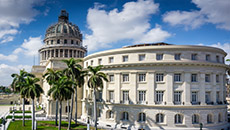
Capitolio Nacional, designed by Cuban Architects and built by the American construction company of Purdy & Henderson.
This monumental building is one of Cuba’s most outstanding architectural patrimony packed with artwork from Cuban and foreign
artists.
The dome is 300.96 ft. high (7 inches higher than the highest capitol building in the US) and the recently renovated gardens are
the work of the famous French Landscape architect, Forestier.
Centro Asturiano, inaugurated in 1927 designed by Spanish Architect Manuel del Busto features solid heavy façades constructed in
Capellania Stones with clear influence of Spanish Renaissance. It houses the most majestic staircase of Cuban Architecture.
Since 2001 the building houses the new Museum of Fine Arts.
Manzana de Gomez, first entire city block built in Cuba in the beginnings of the 20th century completely for commercial use with
two inner diagonal streets that cross the building in all directions integrating the pedestrian circulation with the outer fabric.
Visit to the former
Centro Gallego, built in 1915 by Belgian architect Paul Belau. The facades have a rich decoration derived from
baroque and renaissance styles. Today, the center houses the Gran Teatro de La Habana, home of Modern Dance Companies.
Bacardi Building, designed in 1930 by Cuban architects Esteban Rodriguez Castells, Rafael Fernandez Ruenes and Jose Menendez
Menendez, located in Las Murallas district. The rich façade design is based on polychrome granite imported from Bavaria and Norway
as well as coloured brick, terracotta and Capellania stone. The elaborate decoration of the building crown features a bat, logo of
the Bacardi company.
Visit the rooftop of the
Sevilla Hotel for an eagle view of the walk you have taken in the morning while enjoying a refreshing
Mojito cocktail.
A new wave of paladares (private family-run restaurants) has recently swept the Cuban dining scene offering excellent food and charming ambient. Today we’ll enjoy a welcome lunch at the stylish
Paladar Cafe Laurent at the penthouse terrace of a small 1950s apartment building.
Walking tour along the
Paseo del Prado, a pedestrian promenade remodelled in 1929 with the inauguration of Havana’s Capitol Building.
Visit to residential buildings along the boulevard with clear influence from European and American architecture. Visit to the
interior of the most important residence: Cuba’s former president
Jose Miguel Gomez Residence.
Visit to Telegrafo Hotel.
Visit to the former
Asociacion de Dependientes del Comercio, a Venitian neo-renaissance style building placed in a key corner
of the Prado featured in the film Buena Vista Social Club.
Visit to the former
Casino Español, currently used for wedding ceremonies for its lavish interiors.
Return to your private rental accomodation.
Evening: tonight we have a
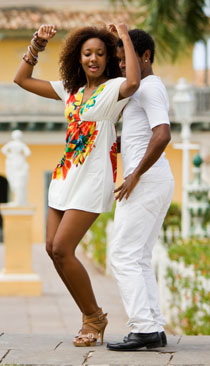
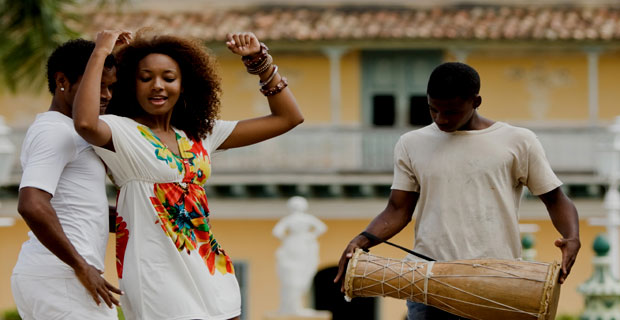
Cuban band playing for us! You'll learn to dance to Salsa, Son, Rumba, and other popular Cuban rhythms
with instruction from bandleaders.
Day 4. Tuesday 12 August 2025.
Havana
Morning: guided tour of the
Cuba's National Art Schools. The schools were designed and built by architects Cuban Ricardo Porro and
the Italians Roberto Gottardi and Vittorio Garatti from 1961 to 1965, in the former affluent neighbourhood of Country Club
Park (today known as Cubanacán), specifically on the grounds of the Havana Country Club golf course.
Only two of the schools were completed, the rest being abandoned and awaiting restoration funding recently approved by the
Cuban government.
Lunch hosted by
Jose Fuster, one of the most important Cuban ceramists and painters today.
Afternoon: visit to
Partagas Cigar Factory, founded in 1845 by Spaniard Don Jaime Partagas. Don Jaime owned many of the best
plantations in the Vuelta Abajo tobacco-growing region of Cuba and being able to choose from among the finest tobaccos on the
island made the brand Partagas incredibly successful.
Don Jaime is also believed to have experimented with various methods of fermenting and aging tobacco and is legendarily credited
with hiring the first lector to read to and entertain the cigar rollers as they worked. Before and after the Revolution, the
Cuban-produced Partagás has been one of the most revered and highest-selling brands of cigars in the world.
Return to your private rental accomodation.
Evening: attend one of the most traditional and popular ceremonies in Cuba,
Fire of the Cannon of 9 O'Clock at the
Fortress of San Carlos de La Cabana.
Day 5. Wednesday 13 August 2025.
Havana- Cienfuegos- Trinidad
Morning departure to
Trinidad, in Central Cuba.
En route, we will visit
Cienfuegos, a city of neoclassical buildings with a European flair.
Visit to
Palacio de Valle upon arrival. This architectural jewel originated as a home for trader, Celestino Caceres, who later
gave it as a wedding present to the Valle family who added to it (in a Mughal Style with carved floral motifs) a stunning Carrara
marble staircase, cupped arches, bulbous domes and delicate arabesques.
Lunch is included at
Paladar Ache, one of Cienfuegos top ten private restaurants, serving local specialties in a pleasant courtyard.
Afternoon: guided by Cienfuegos City Historian, architect Iran Millan Cuetara, we will
embark on a walking tour of
Cienfuegos Historical Centre.
We will visit neoclassical buildings around
Paseo del Prado and the main
Square Jose Marti such as:
The
Tomas Terry Theatre, completed in 1895 and named after a sugar baron from Venezuela who arrived in Cuba with no money and
made his fortune by buying sick slaves for a low price, to later nurse them back to health and reselling them. This money was
invested in a sugar estate that brought him the wealth to build several outstanding buildings in Cienfuegos, including this
theatre, with materials specially brought over from Europe.
The
Casa de la Cultura, home of another wealthy sugar baron, stunning mansion in neoclassical style.
The
Cathedral built with the donation of wealthy families like the Lebrancs, the Albis, the Terrys. Inside you find the
reproductions of the 12 Apostles in stained glass imported from Paris. Also the original machinery of the clock tower was built
in France. Still in place and working.
We'll also visit the elegant art gallery
Galería de Arte Maroya and review its impressively displayed collection of paintings,
sculptures and antiques.
Now we journey on to the historic city of Trinidad and check in at your
Luxury Casa Particular.
You'll have time for dinner and a swim in the warm waters of the Caribbean Sea.
Day 6. Thursday 14 August 2025.
Trinidad
Morning: guided by City Historian, we will take a walking tour of UNESCO World Heritage Site,
Trinidad’s Historical Center, a perfect relic of
the early days of
the Spanish colony with beautifully preserved streets and buildings with hardly a trace of the 20th century anywhere.
Visit to the
Architecture Museum (Casa de los Sanchez Iznaga), housing the most representative samples of the city's architectural
development in the 18th and 19th centuries.
Visit to
Museo Lucha contra Bandidos, former home of the San Francisco de Asis convent.
Visit to
Museo Romantico, overlooking the Trinidad main square. It has an excellent exhibition of romantic style porcelain, glass,
paintings and decorative furniture which belonged to the Conde de Brunet and other Trinidad notorious families.
We will stop at a mirador (lookout) over the
Sugar Mill Valley, where the sugar barons used to have their countryside mansions and
mills. This site is an UNESCO World Heritage Site.
Trinidad is well known for its
pottery makers. We meet with a family that has been passing the tradition for generations:
the Santanders.
Lunch at
Solananda Paladar.
Free time to wander the streets of historical centre or enjoy the beach.
Evening is free to enjoy the beach and the lively streets of Trinidad. How about live Cuban popular music on
steps of
Casa de la Música – a great opportunity to dance with Cubans and your tour companions.
Day 7. Friday 15 August 2025.
Trinidad- Topes de Collantes- Havana
Morning: we will board former Russian army trucks for
Topes de Collantes in the Escambray Mountain Range,
Cuba's second highest mountain range- reaching 3,700 feet atop Pico San Juan. The mountains are home to small mountain
villages and are a delight for birders and walkers alike. Slopes are swathed in Caribbean pines, ancient tree ferns, bamboo,
and eucalyptus.
Arrival at
Hacienda Codina, an old Spanish Hacienda, once part of a large Spanish coffee plantation where we will have a typical
lunch. Followed by a walk around this area to admire the beauty of the surrounding landscape.
Topes de Collantes National Park in the Escambray mountains in Central Cuba. A perfect place for
encountering the Cuban Emerald
(
Chlorostilbon ricordii), Broad-winged Hawk (
Buteo platypterus), Cuban Parrot (
Amazono leucocephala),
Fernandina’s Flicker
(
Colaptes fernandinae)…
Afternoon: transfer back to Havana City.
Day 8. Saturday 16 August 2025.
Departure
Early morning departure to Havana City International Airport for
departure.




 Hola! My name is Yane Marquez and I was born and raised in Cuba. After graduating from the University of Havana and the Tourism School of Cuba, I worked for over 10 years as a tour guide, translator and event organizer for Cuba's travel companies and organizations. I guided many groups attending Cuba's main international festivals, fairs and events. A few years ago, I moved to Canada where I have continued promoting Cuba’s tourism industry. I would be more than happy to answer any question you have about festival Cuba travel. Do not miss out!